
Belize is often known for beautiful beaches, warm weather, and easygoing cocktails — a postcard-perfect destination built for water sports and sun. But if you step off the beaten path, you’ll discover something even richer: a living culture, deep culinary tradition, and community-centered hospitality that stays with you long after you’ve left.
On this journey, I headed to the eastern coast of Belize to experience one of the country’s cultural treasures — the Garifuna community of Hopkins Village. I met my guide, shopped for ingredients to cook a traditional dish, and ended the day with a drumming lesson on the beach.
Must-try: Garifuna coconut milk broth (Sere La Sus) with fresh fish
Don’t miss: A market stroll with local fruit + ground provisions
Signature dish: Hudut (plantain + coconut + fish)
Wild moment: Beachside drumming lesson at sunset
Watch the full Hopkins Village, Belize episode of Appetite for Adventure on Tubi or Amazon Prime Video.

My trip to Hopkins Village begins with an hour-long drive from Belize City, the country’s commercial hub. The views are gorgeous — lush greenery, mountainside scenery, and that unmistakable tropical feeling that makes you roll the window down just to breathe it in.
Hopkins Village is a quaint, traditional fishing village established in the 19th century, and it’s considered the cultural center of Belize’s Garifuna population.
The Garifuna are descendants of a shipwrecked slave ship who intermarried with the Arawak Indians on the island of St. Vincent. To escape persecution, they fled to the island of Roatán and later to Central America, arriving in Belize in the early 19th century.
It’s a story of survival, resilience, and cultural preservation — and you feel that pride in the food, the music, and the way traditions are passed down.
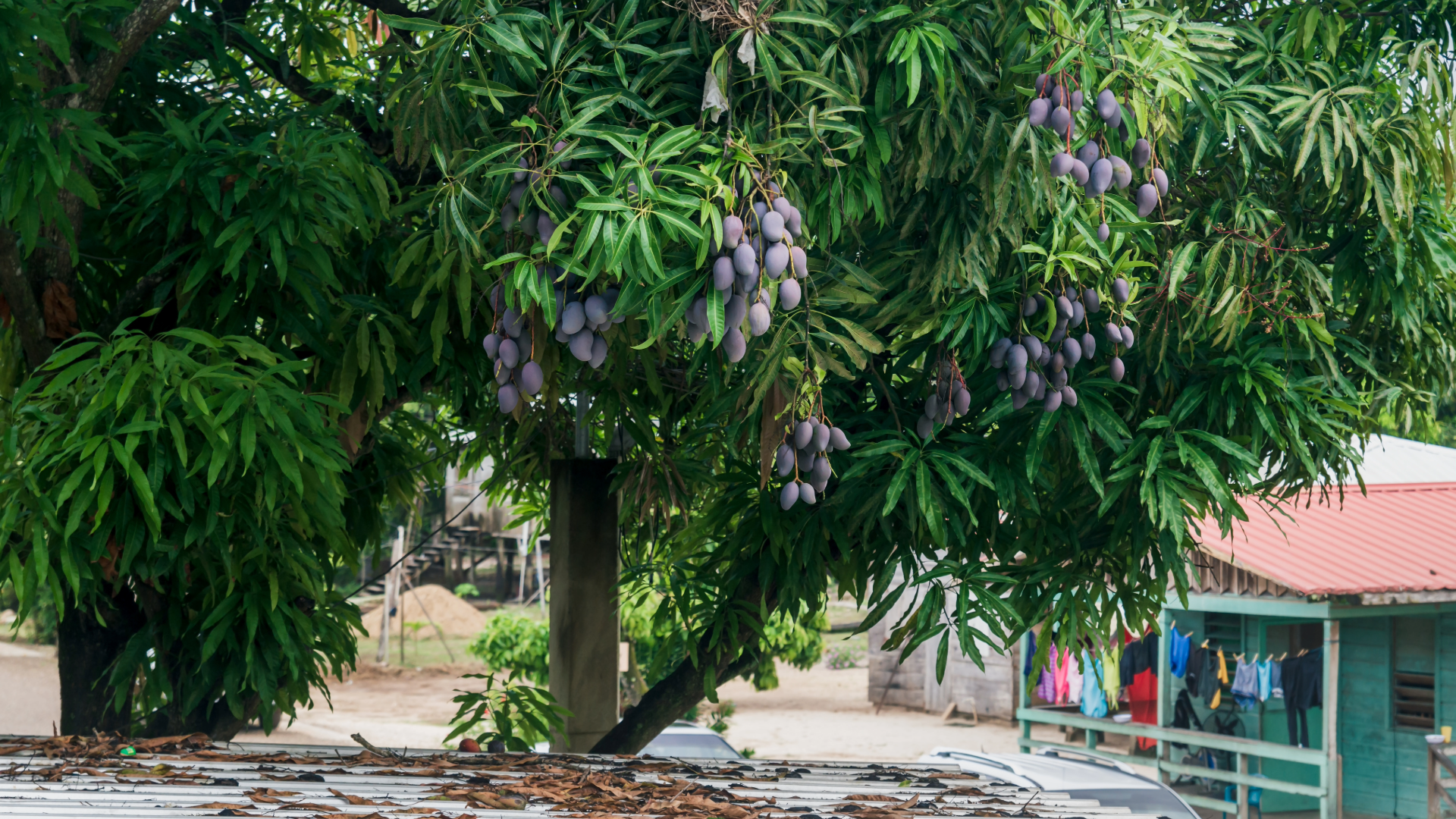
I arrived in Hopkins Village just before mango season, with fruit hanging from trees everywhere — succulent, golden, and impossible to ignore. I was on my way to meet my guide for the day: Chef Sean.
When I found him, he was husking coconuts — and right away I knew we were about to cook something special. He explained that dried coconuts are best for making coconut milk, and in Belize, coconut milk isn’t just an ingredient — it’s a foundation.
And then came one of my favorite moments of the day:
“These people are pescatarians.”
Perfect for me.
As we drove through the village, Chef Sean explained what makes Garifuna cuisine so distinct. While Mayan cuisine is rooted in corn, Garifuna food is grounded in coconut milk, fish, plantains, and cassava — simple ingredients executed with incredible skill and flavor.
It was the kind of food philosophy I instantly connected with: fresh, local, unfussy, and deeply nourishing.
We stopped to see the day’s catch — and it was exactly what you hope for in a coastal village: fresh fish handled with care and pride. Snapper, barracuda, and the kind of “caught today” freshness that makes you want to cook immediately.
Chef Sean even pointed out the roe — calling it the “caviar” of the fish — a reminder that in many cultures, the most flavorful parts are never wasted.
Next stop: the market. It was lively, colorful, and full of ingredients that felt both familiar and completely new.
One of the most unexpected (and delicious) discoveries? A seaweed drink made with cinnamon, nutmeg, and vanilla — naturally creamy and smoothie-like, with the kind of flavor that makes you pause and go back for another sip.
As we walked, I spotted okra, tamarind, annatto (achiote), and soursop — a fruit you don’t often see in the States, with a soft, fragrant flesh that’s perfect for smoothies or ice cream.
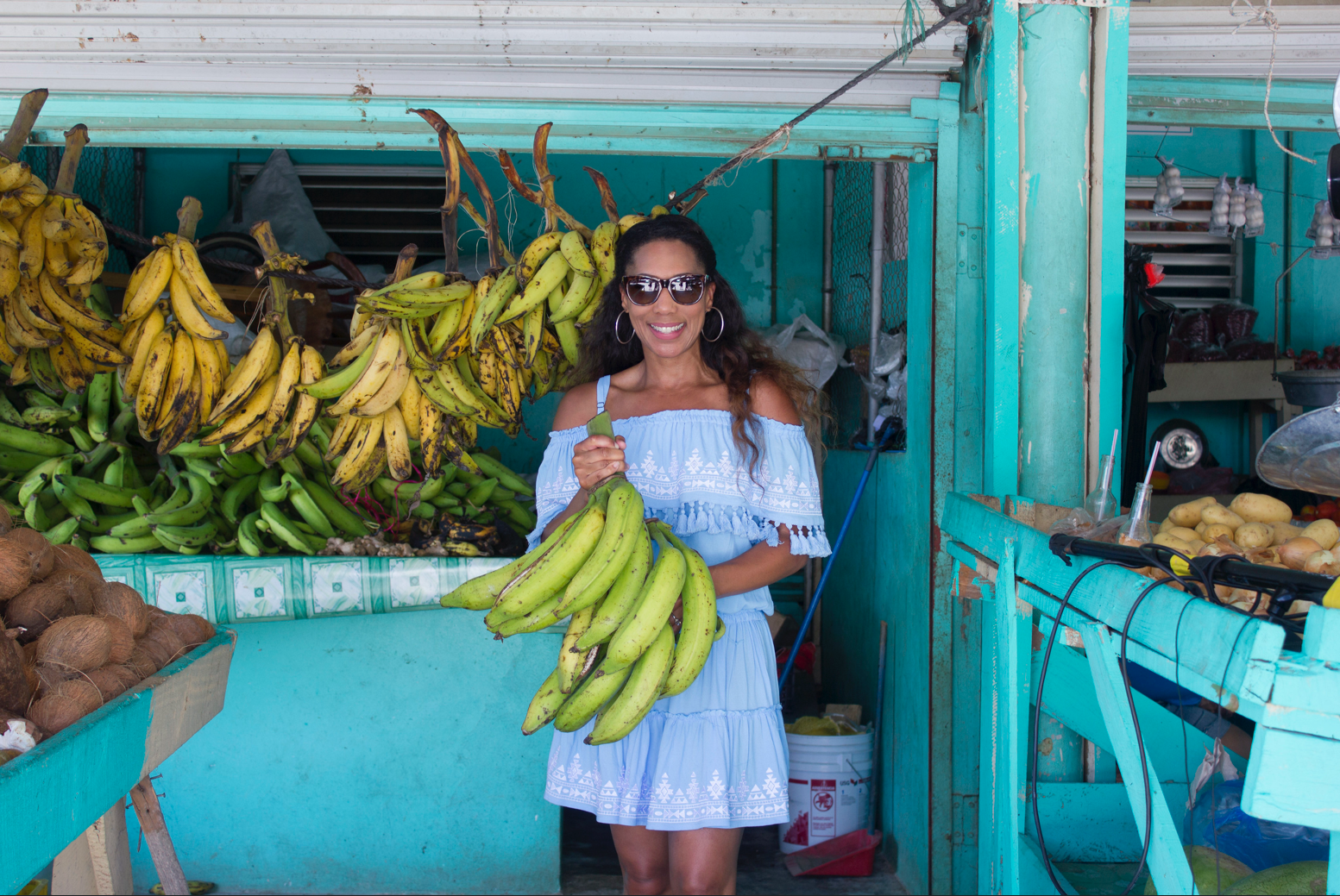
Chef Sean told me we were making a dish called Hudut, served with a coconut milk broth called Sere La Sus — and I was all in.
We also talked through other Garifuna preparations:
Bundiga: dumplings made from grated green banana
Tapou: sliced green banana cooked in the broth
And then we headed to a Garifuna stall to gather what we needed. A Garifuna stall with Mrs. Sabal (and a Coconut Grater!)
We met Mrs. Sabal, who welcomed us into her beautiful stall filled with Garifuna staples: ground provisions, cassava bread, and fresh fish. She introduced me to ingredients like yampe (a potato-like root that can be white or purple), and we talked through the heart of Garifuna cooking: plantain, coconut, and fish.
She also showed us how coconut is grated — on a large, traditional grater that’s equal parts tool and cultural artifact. It’s hands-on, it’s physical, and it’s a reminder that food is often earned through effort.
We also explored cassava bread — crisp like a cracker, made by peeling and grating cassava, straining out the liquid, drying it, and baking it.
Back in the kitchen, it was time to cook — and it started with coconut milk.
We grated coconut, steeped it, strained it, and built a coconut milk broth the way it’s meant to be made: fresh, fragrant, and alive with flavor. This broth is Sere La Sus, and it’s the soul of the dish.
Then we added the fish — head, tail, and all — because that’s where the flavor lives. The key is gentle heat so the coconut milk doesn’t separate. In just about fifteen minutes, the broth was ready.
A little salt, pepper, garlic — and one essential ingredient: basil, known as mase in Garifuna, pulled straight from the garden.
Next came the Bundiga — dumplings made from grated green banana, scooped and dropped right into the bubbling broth.
Then we added Tapou — sliced green banana cooked directly in the coconut milk soup.
Three variations, one pot, and the kind of comfort food that makes you feel taken care of.
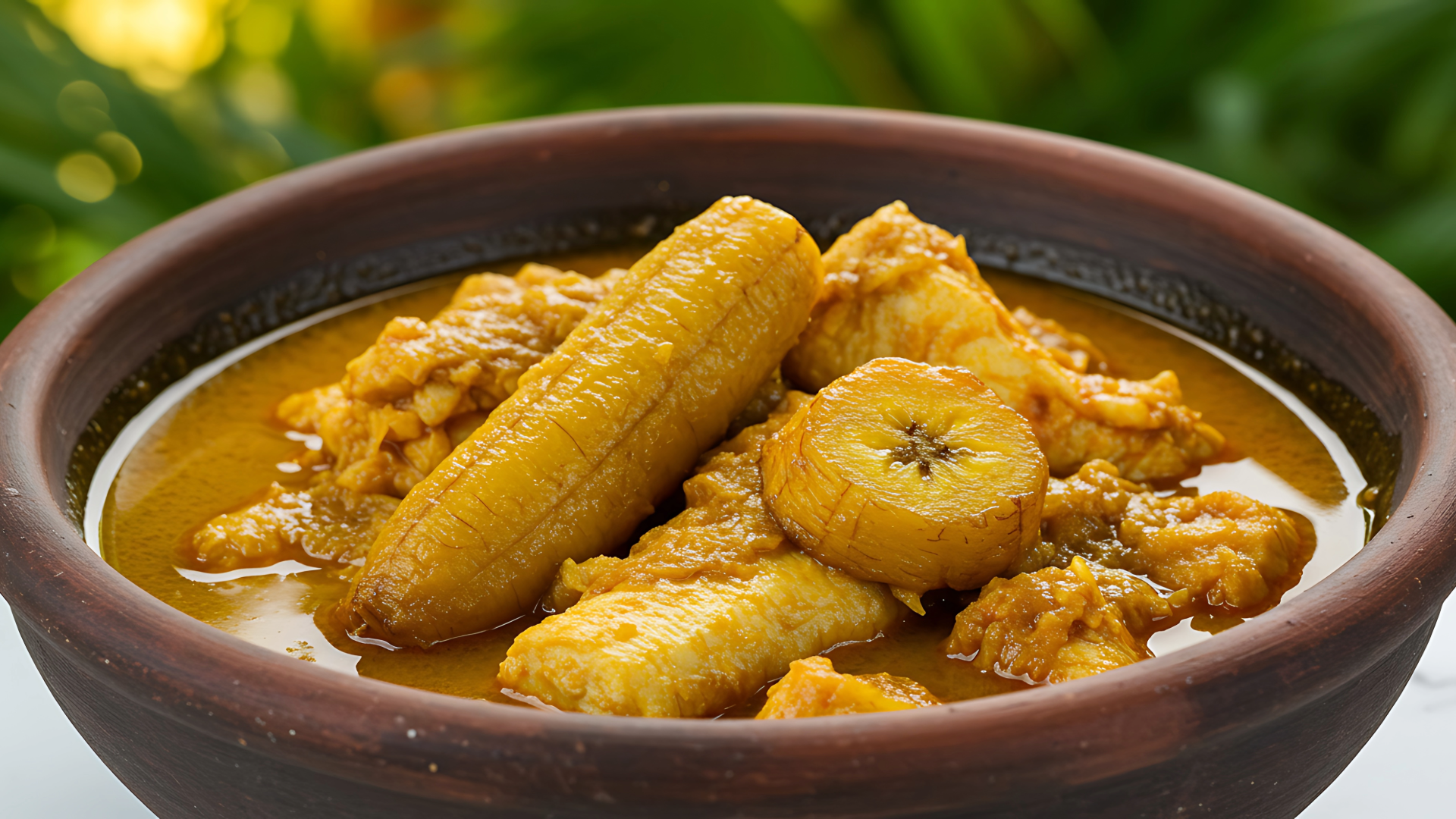
If you ask about Garifuna cuisine, you’ll hear one word again and again: Hudut.
Hudut is made from boiled plantain, mashed in a large wooden mortar and pestle until smooth and elastic — almost like a coastal cousin of fufu. It’s simple, hearty, and the perfect match for a coconut milk seafood broth.
Finally, it was time to eat.
We brought everything together into one bowl — the coconut broth, the fish, the dumplings, the sliced green banana, and the Hudut. The flavors were gentle but deeply satisfying: a natural sweetness from the plantain, richness from the coconut milk, and that clean, fresh taste that only comes from seafood cooked simply.
This food isn’t complicated — it’s honest. Most of it was grown right there in the village, and it tasted like it.
Music is a vital part of Garifuna culture, defined by percussion, maracas, and singing — the kind of rhythm that travels through your body before you even realize you’re moving.
To end the day, I joined a drumming lesson on the beach. I learned about the lead drum, the bass drum, and how tuning is part of the craft. Barefoot in the sand, I played Paranda — and it was the perfect finale to a day rooted in culture, food, and community.
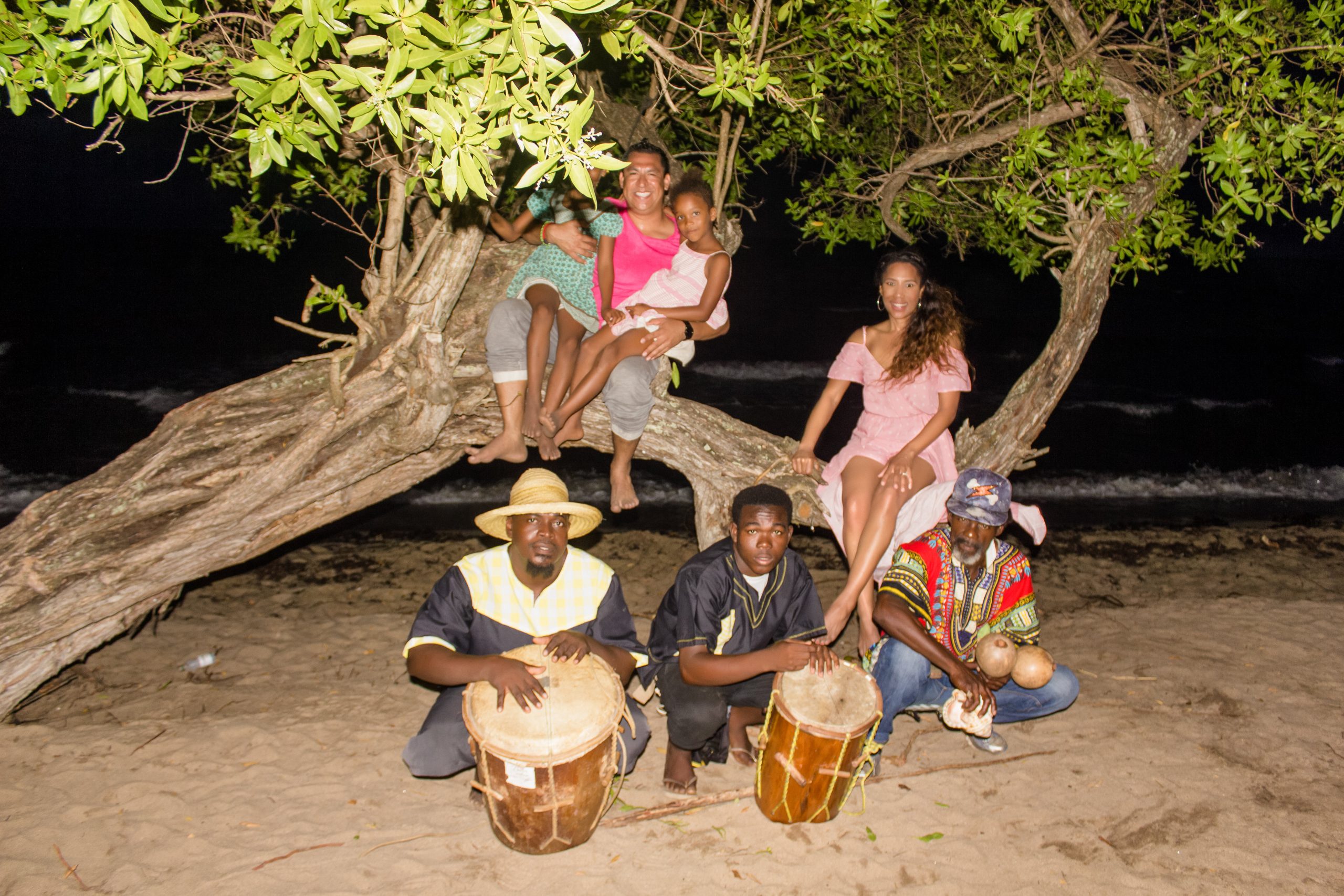
I had a wonderful time in Hopkins Village — meeting new friends, eating incredible food, and learning firsthand about the Garifuna community.
If you find yourself in Belize, stop by Hopkins Village. Take a cooking lesson, explore the markets, and don’t leave without hearing the drums on the beach.
I’ll see you on my next adventure.