
About That White Stuff on Your Fish…
A Posh Pointer
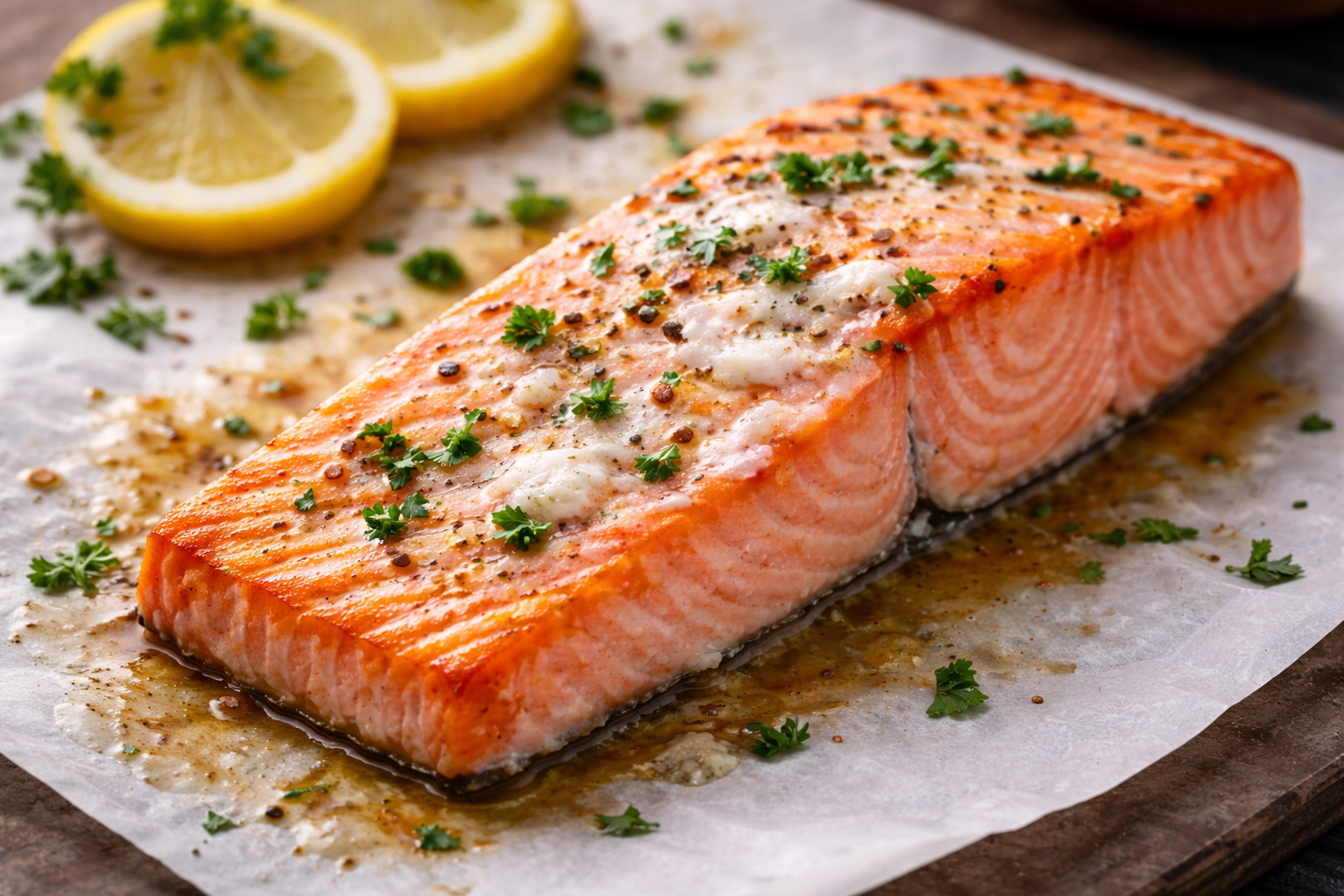
If you’ve ever wondered whether you did something wrong if white stuff appears on your salmon — you didn’t.
That creamy-white substance that sometimes appears on salmon—and occasionally halibut or other white fish—isn’t fat, and it isn’t a flaw. It’s albumin, a natural, harmless protein that exists not only in fish, but also in eggs and land animals.
According to the Journal of Science, albumin lives in fish in liquid form and appears when the muscle fibers in fish are heated and contract, pushing out the white-colored protein.
As fish cooks, its muscle fibers tighten and gently push this protein to the surface. Whether you’re broiling, baking, or grilling, albumin can make an appearance at any time. It’s simply the fish responding to heat—nothing more, nothing less.
There’s a myth that albumin only shows up when fish is cooked too fast or too hot. In my experience, it’s wonderfully unpredictable. Every fish is unique, and each fillet releases albumin differently. Nature doesn’t read recipes.
While albumin is perfectly safe (and nutritious) to eat, I understand that some cooks prefer a cleaner presentation. When it appears I take own two approaches:
Blot & refine: Gently blot with a moist paper towel, then tidy up with the pointed end of a chopstick for a polished finish.
Garnish generously: A vibrant herb salad, citrus slices, or a glossy sauce turns “imperfection” into intention.
Check out the video to see how to easily remove albumin.
If you want to be proactive, a quick brine works beautifully. Dissolve 1 tablespoon salt per cup of water and soak the fish briefly before cooking—this helps relax the muscle fibers and minimizes albumin.
In a pinch? Salt the fish and let it rest for 20–30 minutes. You’ll see it “sweat” as proteins release, making them easier to wipe away before cooking.
Mix up the cut of salmon you use to improve your chances of a more albumin-free finish. In my experience, bone-in cuts—such as salmon steaks—often release less albumin. And when it does appear, it’s typically easier to manage and refine for a cleaner, more elegant presentation.
Understanding ingredients is part of cooking with confidence — and confidence is always in season.