
A grilled octopus story inspired by Portugal, exploring flavor, texture, and classic techniques like octopus cataplana.
Grilled octopus holds a special place in my kitchen, inspired by time spent in Portugal, where seafood traditions are deeply woven into everyday life. While there, I had the opportunity to prepare octopus cataplana, a classic Portuguese dish slowly cooked with aromatics in a clam-shaped copper vessel that traps steam and concentrates flavor. That experience reshaped how I approach octopus—treating it with patience, respect, and simplicity.
When cooked properly, octopus is incredibly rewarding. Its flavor is clean, gently briny, and slightly sweet, with a richness that reflects its life in the ocean. Texture is where octopus truly shines: tender and silky when braised or simmered first, then beautifully crisped on the grill. The contrast between the charred exterior and the supple interior is what makes grilled octopus so compelling.
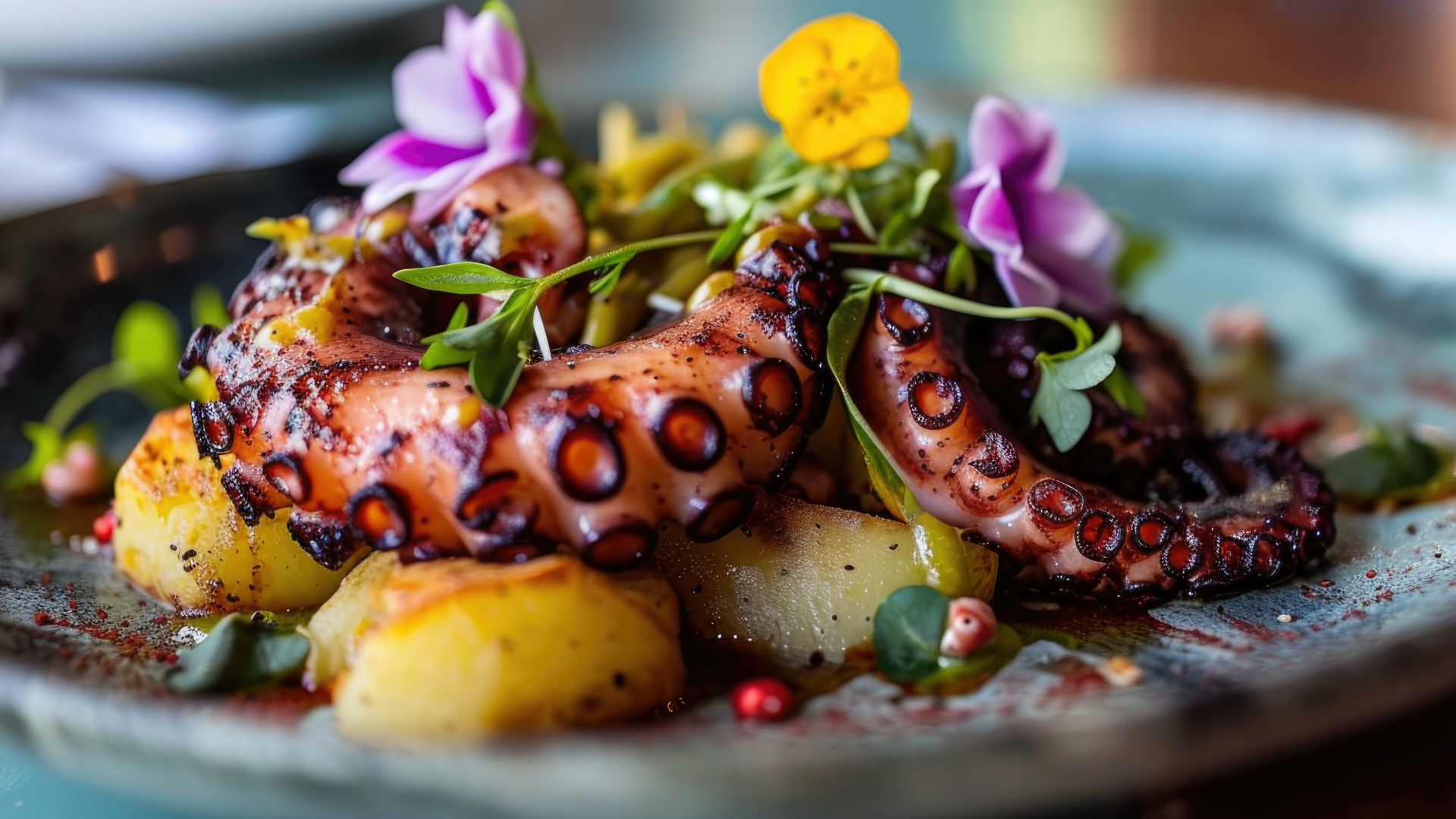
Octopus is often compared to calamari, but the two are quite different. Calamari (squid) is milder and more delicate, with a softer bite that can quickly turn rubbery if overcooked. Octopus, on the other hand, has a meatier structure and deeper flavor. It benefits from slow, gentle cooking to tenderize the flesh before being finished over high heat, making it more forgiving on the grill once properly prepared.
Finished simply—with olive oil, citrus, herbs, or a touch of smoke—grilled octopus becomes a dish that feels both rustic and refined. It’s a celebration of coastal cooking at its best: time-honored technique, thoughtful preparation, and flavors shaped by the sea.
In Portugal, octopus isn’t considered exotic or adventurous—it’s comfort food. It shows up at family tables, seaside taverns, holiday meals, and festivals, prepared with care and confidence that comes from generations of cooking by the sea. Portuguese cooks treat octopus the way others might treat roast chicken: familiar, trusted, and deeply loved.
Along the coast, octopus is often simmered slowly until tender, then finished simply with olive oil, garlic, herbs, and sometimes smoke or char. Dishes like octopus cataplana or polvo à lagareiro highlight restraint rather than excess, allowing the natural flavor and texture of the octopus to take center stage. The result is food that feels both humble and celebratory.
This reverence for octopus extends across southern Europe. In Spain, octopus is famously served as pulpo a la gallega—tender slices dressed with olive oil, paprika, and sea salt, often eaten standing at outdoor tables. In Italy, especially in the south, octopus is braised, grilled, or added to simple tomato-based preparations, prized for its rich flavor and satisfying bite. In Greece, it’s sun-dried, grilled, and served with lemon and olive oil, a staple of island cooking where the sea defines daily life.
Across these cultures, what connects the dishes isn’t a single recipe, but a shared philosophy: respect the ingredient, cook it properly, and don’t overcomplicate it. Octopus is valued for its ability to transform with patience—tough when rushed, but luxuriously tender when given time. That transformation is part of the ritual and the reward.
Grilled octopus, in particular, captures the essence of southern European coastal cooking. After being gently cooked to tenderness, it’s kissed by fire to add smoke and texture, creating that signature contrast between crisp edges and silky flesh. It’s the kind of dish meant to be shared slowly, often outdoors, with good olive oil, citrus, and conversation.
In these regions, octopus isn’t a novelty—it’s a reflection of life shaped by the water. And cooking it well is less about technique alone and more about understanding rhythm, patience, and place.


Buying Octopus: Raw vs. Precooked
When purchasing octopus, you’ll typically find it available either raw (fresh or frozen) or precooked, and each option has its advantages depending on how you plan to use it. Raw octopus is ideal if you want full control over tenderness and flavor. Look for octopus with firm, glossy flesh and a clean, ocean-fresh smell—never fishy or sour. Fresh octopus should appear moist, not slimy, while frozen octopus is often an excellent option, as freezing helps break down tough muscle fibers and can actually improve tenderness. Raw octopus is best for traditional preparations like slow braising, stews, or long, gentle simmering before grilling or finishing over high heat.
Precooked octopus, often sold vacuum-sealed or packed in oil or brine, is a convenient and reliable choice for home cooks. Because it has already been tenderized, it can be sliced and served cold in salads, quickly warmed, or charred on the grill for crisp edges and a smoky finish. When buying precooked octopus, check the ingredient list—ideally, it should contain only octopus, salt, and water, with no unnecessary additives. While precooked octopus offers less flexibility than raw, it delivers consistent texture and saves significant prep time, making it perfect for weeknight meals or entertaining with ease.